Local SEO for restaurants in Abu Dhabi means showing up when hungry people search Google or Google Maps. In 2026, winners do four things well: a complete Google Business Profile with real food photos, a steady flow of genuine reviews, a website with menu and area pages, and accurate listings on Talabat, Zomato, and TripAdvisor. This guide shows each step.
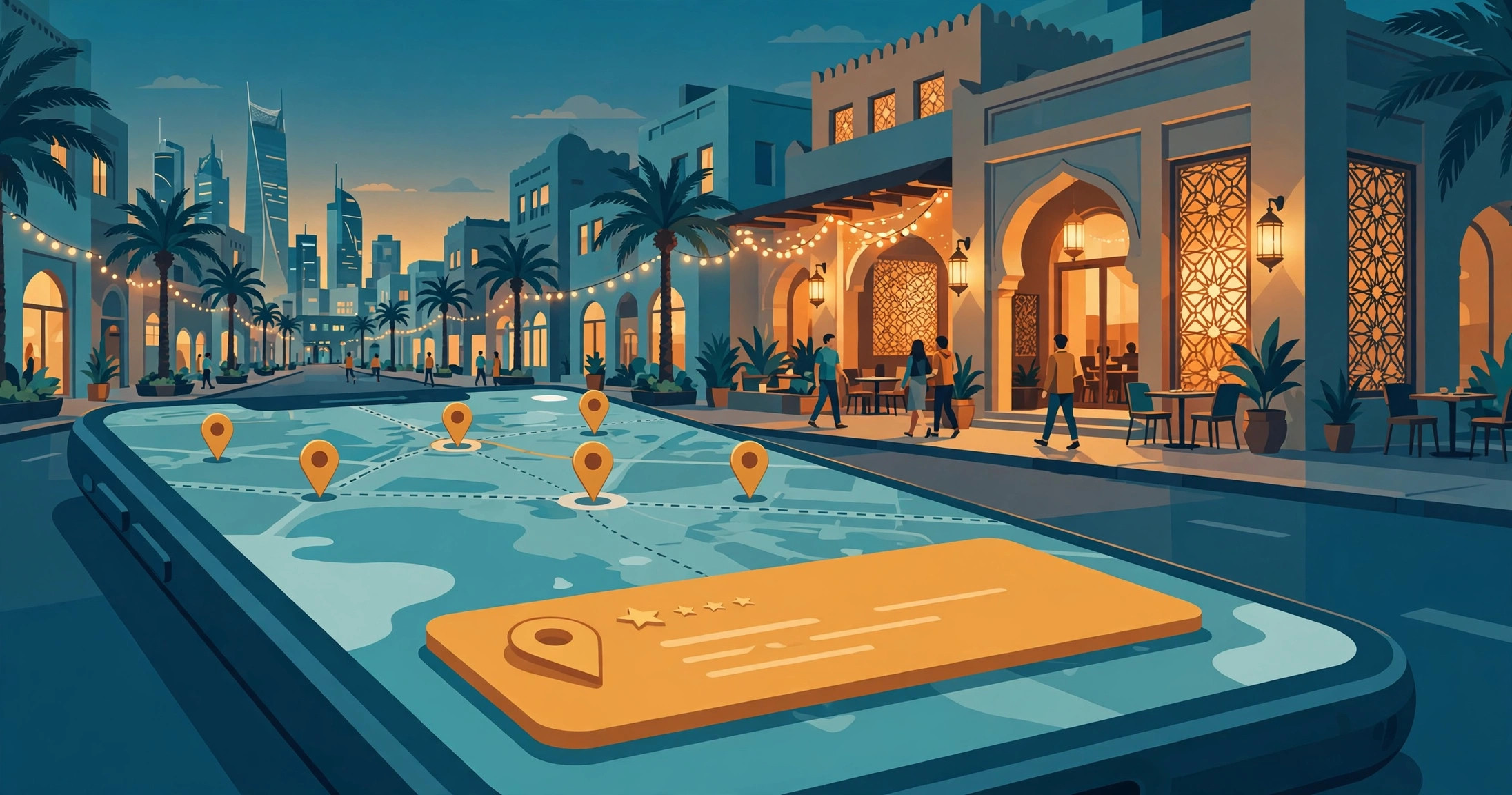
It is 7:30 in the evening on Electra Street. Khalid owns a small restaurant there — clean tables, good mandi, fair prices. Outside his door, a family of four stands on the pavement, phones in hand, reading Google Maps. Thirty seconds later they walk fifty metres down the road and sit in his competitor's restaurant.
Khalid did not lose that family because his food is worse. He lost them because his competitor shows up on the map and he does not. This is how restaurants in Abu Dhabi win or lose customers in 2026 — not on the street, but on the phone screen.
Why Restaurants Live or Die on Google Maps in Abu Dhabi
People do not search for restaurants the way they search for plumbers. When someone searches for food, they are usually hungry right now and want an answer in one minute. That urgency changes everything. When someone in Abu Dhabi searches "restaurant near me" or "best shawarma Khalidiyah", Google shows a map with three restaurants — the map pack — and most people tap one of those three. If your restaurant is number four, you are nearly invisible, no matter how good your food is.
Three things make Abu Dhabi special. First, the city runs on "near me" searches — lunch near the office, dinner with family, karak with friends at midnight. Second, tourists flood in for the Sheikh Zayed Grand Mosque, Yas Island, and the Corniche, searching for food in English with zero knowledge of the city. The restaurant that shows up for "restaurants near Sheikh Zayed Mosque" gets tables full of tourists. Third, competition is fierce everywhere, from Electra Street to Khalifa City. The fight is not over who cooks best — it is over who gets seen first.
Local SEO for restaurants is the work of winning that one-minute decision. It has four parts: your Google Business Profile, your reviews, your website, and your listings on food platforms.
Your Google Business Profile Is Your Digital Signboard
Your Google Business Profile — the listing that shows your restaurant on Google Maps — is the single most important thing in restaurant local SEO. Treat your profile like the signboard outside your door: if it is broken or wrong, customers walk past.
- Claim and verify your profile. Search your restaurant name on Google. If a profile exists, claim it; if not, create one. Until you verify, you cannot control what shows.
- Choose the right primary category. "Restaurant" is the default, but be specific: "Lebanese restaurant", "Fast food restaurant", "Cafe", "Seafood restaurant". Add secondary categories like "Family restaurant". The category tells Google which searches you should appear for.
- Fill in everything. Hours — including Friday, Ramadan, and public holidays. Phone number. Website link. The exact address, pinned correctly on the map. A short description: "Family mandi restaurant in Khalidiyah, Abu Dhabi — dine-in, takeaway, and family seating." Google shows complete profiles more often.
- Add your menu properly. Google lets you add menu items directly — dish names and prices. People search for dishes: "mutton mandi", "chicken shawarma", "karak tea". If those words are in your profile's menu, you can appear for those searches. Update prices when they change; a wrong price creates angry customers and bad reviews.
- Upload real photos — lots of them. Your actual food, your dining area, your entrance so people recognize it from the street. Use your phone; real photos work fine. Add new photos every month. Never use stock photos of food you do not serve — customers notice when the real plate arrives, and the review they leave hurts more than the photo helped.
- Set the right attributes. Mark "family-friendly", "outdoor seating", "takeaway", "dine-in" — whatever is true. Families searching for a Friday lunch filter by these.
- Keep hours accurate, always. Nothing destroys trust faster than Google saying "Open now" when your shutters are down. Update hours for Ramadan timings, Eid holidays, and temporary changes — Google lets you set special holiday hours in advance.
Do this checklist once, properly, and you have already overtaken most restaurants in Abu Dhabi.
Reviews: The Currency of Restaurant SEO
When a hungry person sees three restaurants on the map, they tap the one with 4.6 stars and 800 reviews, not the one with 3.9 stars and 40 reviews. Reviews are also a ranking factor: Google shows restaurants with more and better reviews higher.
Ask at the right moment — right after a good meal, while the customer is still happy. Train your staff to say one sentence when clearing a happy table: "If you enjoyed your meal, a Google review would mean a lot to us." A table card with a QR code to your review page removes all effort.
Reply to every review — good and bad. Thank people for good reviews by name when you can. For bad reviews, reply calmly, never defensively: "We are sorry your experience was not good. Please message us so we can make it right." Future customers read your replies more carefully than you think.
Welcome photo reviews. When customers upload photos of your food, those photos appear on your profile and convince other diners.
Never buy fake reviews. Paid reviews and review farms eventually get caught. Google removes fake reviews in waves, and a profile caught with fake reviews can be suspended — disappearing from Maps entirely. A realistic target: a few new genuine reviews every week. In a year, that is over a hundred — enough to stand out in most Abu Dhabi neighbourhoods.

Your Website: The Five Pages Every Abu Dhabi Restaurant Needs
Your Google profile wins the map. Your website wins everything else: diners who want to see the full menu, check prices, or book a table. It does not need to be fancy — fast on phones and built around what customers look for. Here are the five pages that matter:
- Homepage with your location front and centre. In the first screen a visitor should see what food you serve, where you are (area name, not just "Abu Dhabi"), your hours, and a big button to call or get directions.
- A real menu page — not a PDF. Google cannot read PDFs properly, and phone users hate pinching and zooming. Type your menu out as real text: dish names, descriptions, prices. Each dish name is a keyword someone might search: "chicken machboos", "kunafa", "fresh orange juice".
- Location and area pages. One simple page per area you genuinely serve: "Lebanese Restaurant in Khalifa City", "Family Dining near Yas Island". Mention the area naturally: nearby landmarks, delivery areas, parking. Never fake area pages for places you do not deliver to.
- Reservations and ordering page. A click-to-call button, a WhatsApp order button, a simple booking form, and links to your delivery profiles. Every extra click between "I want this food" and "food ordered" loses customers.
- About page with your story. Why did you open this restaurant? A short, honest story with a kitchen photo builds trust — and gives food bloggers something to quote, which earns you links.
First, your site must load fast on a phone with average mobile data — compress your food photos before uploading. Second, it must work perfectly on small screens: big tap targets for the call button, readable menu text without zooming, no popups blocking the phone number.
Want this done for you? If your restaurant's Google profile is half-empty and your website has no real menu page, you are not alone. SEORankGulf offers a free SEO audit for Abu Dhabi restaurants: we check your Google profile, reviews, website, and food-platform listings, then tell you honestly what to fix first. Message us on WhatsApp: +92 315 0642491 — no obligation, just a straight answer.
The Keywords Hungry People Actually Type in Abu Dhabi
Hungry people type short, urgent phrases. Nobody searches "restaurant value proposition Abu Dhabi". Here are the patterns that matter:
"Near me" searches. "Restaurant near me", "shawarma near me". You cannot win these by putting "near me" on your website — that does not work. You win them through your Google Business Profile: correct map pin, right categories, strong reviews.
Cuisine plus area. "Lebanese restaurant Khalidiyah", "best mandi in Mussafah", "Indian restaurant Khalifa City". These are the money keywords — put them on your area pages and in your profile description, written naturally.
Dish names. "Mutton mandi Abu Dhabi", "karak tea Khalidiyah". People crave specific dishes. If your menu page lists these as real text, you can rank for them. Your five most popular dishes each deserve to be findable.
Want this for your business?
SEORankGulf ranks your business on Google's first page — with local SEO, technical fixes, and content that brings customers.
Get a free SEO audit"Open now" searches. "Restaurants open now Abu Dhabi", "late night food Electra". Accurate opening hours on your profile win these — Google filters by who is actually open.
Tourist searches. "Restaurants near Sheikh Zayed Grand Mosque", "where to eat Yas Island". Tourists search in English and add a landmark. If you are near one, say so on your website: "10 minutes from the Sheikh Zayed Grand Mosque". That one sentence can bring tourist tables for years.
Arabic searches. A large share of Abu Dhabi's diners search in Arabic: "مطعم مندي أبوظبي", "شاورما قريبة مني". Most competitors are English-only — adding an Arabic description to your profile puts you ahead of them.
One warning: write for humans, not robots. A page reading "best shawarma Abu Dhabi cheap shawarma Abu Dhabi shawarma near me Abu Dhabi" is keyword stuffing — Google penalizes it, and any human who lands on it leaves.

Talabat, Zomato, TripAdvisor: Your Second Search Engine
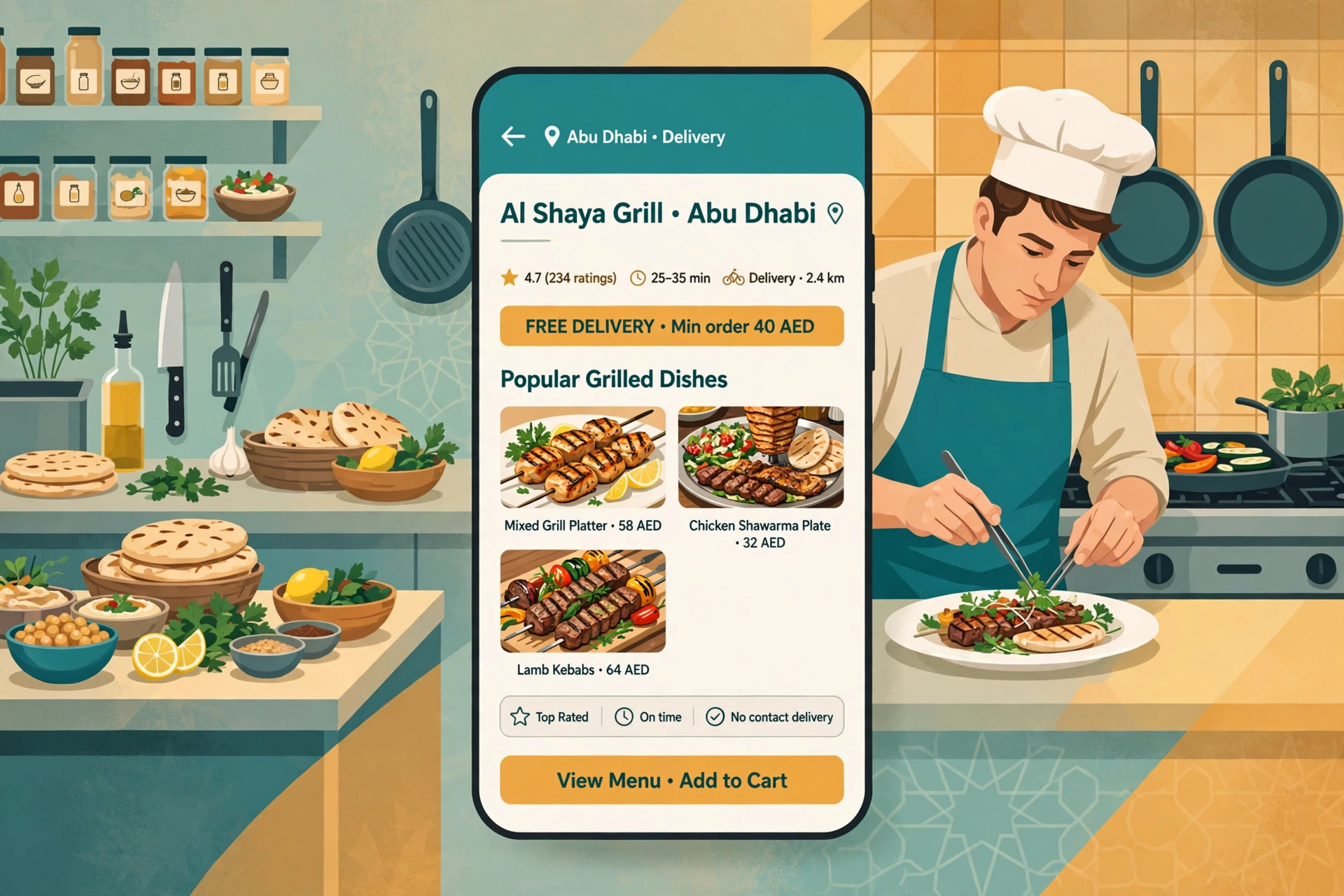
For restaurants, Google is only half the battle. A huge share of Abu Dhabi diners search inside food apps — Talabat for delivery, Zomato for discovery, TripAdvisor for tourists. These platforms rank on Google too: search "best restaurants Yas Island" and Zomato and TripAdvisor pages appear in the results.
Complete every field. On Talabat: accurate delivery areas, delivery times, minimum order, full menu with prices. On Zomato: correct categories and bright, appetizing photos of your real dishes — customers browse by photo, and good photos directly bring more orders. On TripAdvisor: claim your listing and fill in every detail.
Keep menus identical everywhere. Your prices and dish names on Talabat, Zomato, your website, and your Google profile should match. When they do not, customers leave bad reviews about "wrong prices" — reviews that then hurt your Google ranking. One menu, updated everywhere, every time prices change.
Respond to reviews on these platforms too, with the same rules: thank the happy, calmly address the unhappy. And watch your ratings like revenue — a drop from 4.5 to 4.1 on Talabat directly reduces orders, because the app shows ratings before anything else. If ratings slip, find the cause fast: late deliveries, a changed recipe, a rude cashier. Fix the cause, not just the rating.
Content That Fills Tables: What to Publish and When
You do not need a food blog with fifty articles. A restaurant needs a small number of useful pages, published at the right time.
Seasonal pages. Ramadan changes everything about food searches: "iftar buffet Abu Dhabi", "best iftar near me", "suhoor restaurants open late". If you serve iftar, publish your Ramadan timings and iftar menu weeks before Ramadan starts — early pages rank by the time searches peak. Same logic for Eid holidays, National Day weekend, and the winter tourist season.
Landmark and area guides. "Where to eat near Yas Island", "family restaurants near the Corniche". These catch tourists and new residents who do not know the city yet. Keep them honest — put your restaurant in genuine context.
Occasion pages. "Birthday dinner restaurants Abu Dhabi", "business lunch Mussafah". People search by occasion, especially when one person is choosing for a group. A page that speaks to the occasion — private family seating, group platters, quiet corners — converts these searchers.
Your story, told well. Where did your recipes come from? Why this location? Food writers and local news sites link to restaurants with real stories — and those links are among the strongest ranking signals Google has.
What not to publish: generic articles like "10 benefits of eating healthy" that have nothing to do with your restaurant. Every page should answer a question a potential diner actually asks.
Mistakes That Push Diners to Your Competitor
Most restaurants do not fail at SEO because they did nothing — they fail because of a few specific mistakes:
Wrong or duplicate listings. Your restaurant appears twice on Google Maps with slightly different names, or the address is wrong, or the phone number is old. Duplicates split your reviews and confuse Google about which profile to show. Search your name, find every duplicate, and get them merged or removed.
Stock photos instead of real food. Customers arrive expecting the glossy burger from your profile and receive something that looks nothing like it. The one-star review that follows does more damage than the photo ever did good.
Keyword-stuffed business name. Naming your profile "Best Shawarma Abu Dhabi Cheap Late Night" instead of your real name breaks Google's rules. Competitors can report it, Google can suspend the profile, and you vanish from Maps. Use your real name. Always.
Ignoring Arabic. If many of your potential customers search in Arabic and your entire presence is English-only, you have handed them to whoever bothered with Arabic. At minimum, add an Arabic description to your Google profile.
Set-and-forget profiles. You optimized everything in January and never touched it again. Menus changed, hours changed for Ramadan, new dishes launched — none of it updated online. Stale information creates bad experiences, bad reviews kill rankings. Review your profiles once a month; it takes twenty minutes.
No website, or a broken one. In 2026, a restaurant with no website — or one that does not load on phones — looks closed to diners who check everything online first. You do not need much, but you need the five pages from the earlier section, working and fast.
What This Costs and How Long It Takes
The work in this guide splits into two parts: things you can do yourself for free, and things worth paying an expert for.
Free and worth doing this week: claiming and completing your Google Business Profile, uploading real food photos, fixing your hours, typing your menu as text on your website, asking happy customers for reviews, and completing your Talabat and Zomato listings. These cost nothing but a few evenings, and for many restaurants they are enough to move from invisible to competitive on the map.
Paid help makes sense when you want it done faster, your website needs rebuilding, or you are in a fiercely competitive area like Electra Street or Yas Island. For what monthly SEO costs in Abu Dhabi at each level, our Abu Dhabi local SEO pricing guide breaks down the real ranges — restaurant SEO typically sits at the affordable end, because "near me" searches reward strong profiles more than big content campaigns. To see exactly what a professional checks before quoting you, our Dubai SEO audit guide walks through a full audit step by step.
On timelines, the honest version: profile fixes and review flow can move your map visibility within weeks. Website and content work compounds over three to six months. Anyone promising the top map spot in seven days is selling something Google will punish. The restaurants that win do the basics well and keep doing them — new photos monthly, reviews every week, hours always accurate.
Ready to find out where your restaurant stands? Get our free SEO audit: we check your Google Business Profile, reviews, website, and food-platform listings, then tell you plainly what to fix first — and whether you even need us. Message SEORankGulf on WhatsApp: +92 315 0642491. No pressure, no jargon. Or explore our SEO services to see exactly what each plan includes.
Frequently Asked Questions
How do I get my Abu Dhabi restaurant on Google Maps?
Claim your Google Business Profile, verify it, choose the correct restaurant category, add your exact address with the map pin in the right place, fill in hours and phone number, upload real food photos, and add your menu. Most restaurants appear on Maps within days of verification.
How many Google reviews does my restaurant need to rank higher?
There is no magic number, but in most Abu Dhabi neighbourhoods, restaurants with 100+ genuine reviews and a 4.3+ rating stand out clearly. What matters more than the total is the flow: new reviews each month beat a large pile of old ones. Never buy reviews — Google removes fakes and can suspend your profile.
Should my restaurant website have the menu as a PDF?
No. Put your menu on the page as real text — dish names, descriptions, and prices typed out, not trapped in a PDF or an image. Google cannot properly read PDFs, phone users hate zooming into them, and every dish name on a text menu is a keyword that can bring you a hungry searcher.
Do I need Arabic on my restaurant website for Abu Dhabi SEO?
It helps significantly. A large share of Abu Dhabi diners searches in Arabic, and most restaurant competitors are English-only — so Arabic pages face less competition. At minimum, add an Arabic description to your Google Business Profile.
Is Talabat more important than Google for my restaurant?
They do different jobs. Google and Google Maps win the "where should we eat tonight" decision — dine-in customers choosing a restaurant. Talabat wins the "order food to my home" moment. Most successful Abu Dhabi restaurants need both: optimize your Google profile for dine-in discovery and your Talabat listing for delivery orders.